An alternative to reading Pretalx schedules by hand
speakerstrail vs Pretalx
Open-source CFP and scheduling software that publishes a conference’s agenda.
Model: Agenda tooling · 1129 speakers and 35 conferences in the speakerstrail dataset
speakerstrail vs Pretalx: feature comparison
| Pretalx | speakerstrail | |
|---|---|---|
| Who is listed | The accepted speakers of whichever event runs the instance. | Anyone who appeared on a published conference agenda. Nobody applies. |
| How a record gets there | The programme committee accepts the talk; the schedule publishes. | Extracted from the event’s own published agenda, after the talk happened. |
| Per-talk source link | It is the source — the schedule page is the primary document. | Yes — the agenda URL sits on every talk, one click away. |
| Who pays | The organizer, for hosting. Self-hosting is free and open source. | Organizers and agencies, eventually. Free during the closed beta. |
| Speaker pays to be visible | No. | No. No speaker has ever paid to be here. |
| Coverage | One event per instance. No index across instances. | European AI and tech conferences, ingested by hand. |
| Recency as a filter | Not applicable — an instance is one edition. | Yes — when someone last spoke is a first-class facet. |
| Cross-platform agendas | No, by definition. | Yes — Pretalx, Sched, FOSDEM’s archive, EuroPython, the events’ own sites. |
| Contact route | None — it is scheduling software, not a directory. | Almost none. You will reach the person elsewhere, usually LinkedIn. |
| Export and API | Yes — a genuinely good per-event schedule API. | Public, unkeyed REST API, plus a .md twin of every page. |
| Removal on request | Handled by the event that runs the instance. | Yes — /legal/removal, honoured without asking why. |
The Pretalx column was last checked against their own site on 17 November 2026. Where a claim could not be confirmed it says so rather than guessing. Prices are deliberately absent — who pays is structural, what they charge this month is not.
The three that matter most
What it is
- Pretalx
- Software a conference runs to collect talks and publish its schedule.
- speakerstrail
- An index that reads those schedules across many conferences and keeps the record.
Searching across events
- Pretalx
- Not possible — each instance knows only its own event.
- speakerstrail
- One search across every event we have ingested, by topic, country and recency.
After the event
- Pretalx
- Depends entirely on whether the organizer keeps the instance online.
- speakerstrail
- The record persists, dated, with the source URL it was extracted from.
What Pretalx is
Pretalx is open-source software for running a call for papers and publishing a schedule. Conferences install it, review submissions, and the accepted programme goes online at their own domain. It is well built, it has a proper API, and it is one of the main reasons European conference agendas are machine-readable at all.
It is also the single largest source in this dataset. Eight of the events we have ingested publish their agenda through Pretalx, and their schedule pages are what our records link to.
The structural difference
Comparing a directory with scheduling software is only useful because people keep trying to use the latter as the former. You can read a Pretalx schedule and see exactly who spoke — for that conference, that year. What you cannot do is ask which speakers have covered a topic across eleven conferences in five countries, because each instance knows only about itself. There is no index, and building one is not what the software is for.
The other problem is time. An instance stays online as long as the organizer keeps paying for it or keeps the container running. Some archives last a decade; others disappear with the next redesign. We extract while it is up and keep the record with its date and its source URL afterwards.
None of this is a criticism. An index over good primary documents is a strictly better position than an index over bad ones, and Pretalx is why so many of ours are good.
Where we stop
For a single event, the Pretalx schedule beats us on every axis: session times, tracks, abstracts, rooms, and a real API. We hold the speaker, the talk title, the topic, the date and the link.
We are also not a substitute for organizers: if you are running a conference, you want Pretalx or something like it. We only read what it publishes.
Where each is stronger
Pretalx
- The primary document, with times, tracks and abstracts
- A proper per-event schedule API
- Open source, self-hostable, organizer-controlled
speakerstrail
- One search across many conferences instead of one instance at a time
- The record survives an instance going offline
- Topic, country and recency as facets, which no single schedule can offer
What is actually in here
1129 speakers from 35 European conferences — 100% carrying the agenda URL that proves the talk.
- verified speakers
- 1129
- European conferences
- 35
- countries
- 13
- records with a source link
- 100%
Counted from the committed dataset at build time, not typed by hand.
-
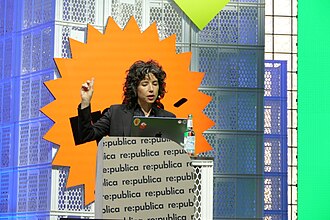 Meredith WhittakerPresident of the Signal Foundation
-
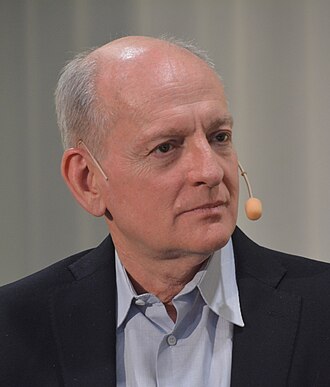 Stuart RussellProfessor of Computer Science, UC Berkeley
-
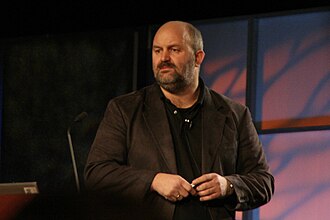 Werner VogelsCTO, Amazon
-
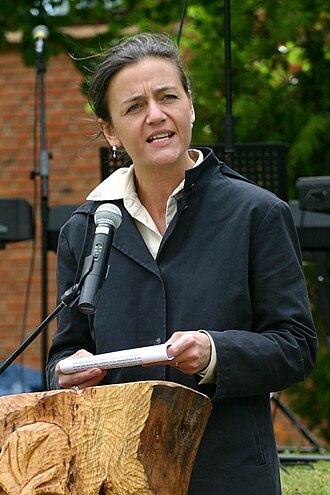 Margrethe VestagerChair, Danish Technical University
-
 Maria RessaNobel Peace Prize laureate, CEO of Rappler
-
 Marietje SchaakeInternational Policy Director, Stanford Cyber Policy Center
-
 Vidya PetersCEO of DataSnipper
-
 Ali NiknamCEO and founder of Bunq
Common questions
- Can I search across Pretalx conferences?
- No. Each instance belongs to one event and knows nothing about any other, which is correct for scheduling software and useless for building a shortlist. Searching across events is the job this directory does, and Pretalx schedules are among the documents it reads.
- Does speakerstrail use Pretalx data?
- It reads published Pretalx schedules, along with Sched, FOSDEM’s archive, EuroPython’s site and conferences’ own pages. Pretalx is the largest single source in the dataset — eight of the ingested events publish through it — and every record extracted from one links back to the schedule page it came from.
- What happens when a conference takes its schedule offline?
- The link may stop resolving, and we would rather say that than pretend otherwise. What survives on our side is the extraction: who spoke, on what, at which event, on which date, plus the URL it came from — which is more than the conference itself typically keeps once the next edition goes on sale.
- Should conference organizers use Pretalx or speakerstrail?
- Pretalx, without hesitation — we are not scheduling software and have no ambition to be. Use this directory for the other half of the job: finding who has been speaking on your topics elsewhere in Europe before you open your own call for papers.
The bottom line
Pretalx publishes the documents this directory is built on, so this is less a comparison than a description of a dependency. If you want one conference’s programme, read its schedule — it is the source and it is better than any index of it. If you want to know who has spoken on a topic across many conferences, in which countries, and how recently, no single instance can answer that, and reading them all by hand is the work this directory has already done.
Build your next shortlist on links, not claims
You have just read how this directory differs from Pretalx. If cross-platform, agenda-verified records are what you need — 1129 speakers, each carrying the source link that proves it — the beta is open. We let agencies in ten at a time. Free, no card.
Other comparisons
Also agenda tooling: vs Sched
vs Sessionizevs SpeakerHubvs eSpeakersvs Speaker bureausvs LinkedInvs SpeakUpvs Talkadotvs Speakers.comvs The AI Conferencevs Kruger Cownevs European Speakers Bureauvs Speakabout.aivs ChatGPT