An alternative to asking ChatGPT for names
speakerstrail vs ChatGPT
The fastest way to get a list of names, and the hardest one to check.
Model: General assistant · 1129 speakers and 35 conferences in the speakerstrail dataset
speakerstrail vs ChatGPT: feature comparison
| ChatGPT | speakerstrail | |
|---|---|---|
| Who is listed | Whoever the model produces. There is no list. | Anyone who appeared on a published conference agenda. Nobody applies. |
| How a record gets there | Generated from training data, plus search if the tool has it. | Extracted from the event’s own published agenda, after the talk happened. |
| Per-talk source link | Sometimes, and sometimes a citation that does not support the claim. | Yes — the agenda URL sits on every talk, one click away. |
| Who pays | You, for the subscription. Nobody pays for placement. | Organizers and agencies, eventually. Free during the closed beta. |
| Speaker pays to be visible | No — but visibility is unexplainable either way. | No. No speaker has ever paid to be here. |
| Coverage | Unbounded and unknowable. You cannot tell what was missed. | European AI and tech conferences, ingested by hand. |
| Recency as a filter | You can ask. Whether the answer is true is a separate question. | Yes — when someone last spoke is a first-class facet. |
| Cross-platform agendas | It may have read them. It cannot show you which. | Yes — Pretalx, Sched, FOSDEM’s archive, EuroPython, the events’ own sites. |
| Contact route | None. | Almost none. You will reach the person elsewhere, usually LinkedIn. |
| Export and API | An API for the model, not for any speaker data. | Public, unkeyed REST API, plus a .md twin of every page. |
| Removal on request | Not meaningfully possible. | Yes — /legal/removal, honoured without asking why. |
The ChatGPT column was last checked against their own site on 23 September 2026. Where a claim could not be confirmed it says so rather than guessing. Prices are deliberately absent — who pays is structural, what they charge this month is not.
The three that matter most
How fast you get a list
- ChatGPT
- Seconds. Nothing on this page is faster.
- speakerstrail
- Seconds to filter, then reading — the shortlist is yours to assemble.
Whether the names are real
- ChatGPT
- Usually. Confidently wrong is the failure mode, and it looks identical to right.
- speakerstrail
- Every record was extracted from a published agenda, and links to it.
What happens when a client asks how you know
- ChatGPT
- You go and verify each name yourself, which is the original job.
- speakerstrail
- You send the agenda link.
How people actually use it
"Give me ten AI speakers who have presented in Berlin recently" returns ten names in seconds, and it is a genuinely good starting point — the model has read enough conference material to surface people you would not have thought of, and it never gets bored.
It is also where the work starts rather than ends. The names come without provenance, and the ones that are wrong are wrong in the most expensive way available: a plausible person, attached to a conference they never spoke at, phrased exactly like the nine correct answers.
The structural difference
A model produces the most likely continuation, which is a different operation from looking something up. When it is right, it is right because the training data happened to support it; when it invents a talk, nothing in the output marks the difference. With search enabled you may get a citation, and a citation that does not actually contain the claim is its own well-documented failure.
The deeper problem for shortlisting is that you cannot see the boundary. A directory that holds a known number of events from a known set of agendas tells you what it does not cover. A model cannot tell you who it left out, so "is this list complete?" has no answer.
This directory is the same task done in the opposite order: read the published agendas first, keep what they say with the link attached, and expose it as filters. Slower to build, faster to defend.
Where we stop
A model will summarise, translate, draft the outreach email and reason about whether a speaker fits your theme. We do none of that — this is a directory with filters.
It also has no coverage limit, and we very much do: European AI and tech conferences, bounded by the agendas we have ingested. For a region or industry outside that, asking a model may genuinely be the better starting point.
The pragmatic answer is to use both, with the order reversed from the usual: get the ideas from the model, then check each name against a source. We publish the source, and we also publish a markdown twin of every page and an open API so an agent can read this dataset directly instead of guessing.
Where each is stronger
ChatGPT
- Instant, unbounded, and good at suggesting people you had not considered
- Reasoning about fit, theme and audience — which a directory cannot do
- Drafts the outreach once you have chosen
speakerstrail
- Every record links to the agenda it came from
- A known, stated coverage boundary instead of an invisible one
- Filters on topic, country and recency that return the same answer twice
What is actually in here
1129 speakers from 35 European conferences — 100% carrying the agenda URL that proves the talk.
- verified speakers
- 1129
- European conferences
- 35
- countries
- 13
- records with a source link
- 100%
Counted from the committed dataset at build time, not typed by hand.
-
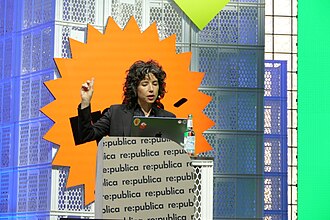 Meredith WhittakerPresident of the Signal Foundation
-
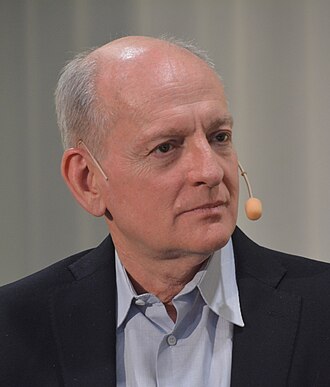 Stuart RussellProfessor of Computer Science, UC Berkeley
-
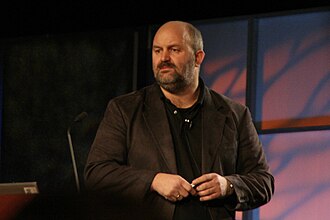 Werner VogelsCTO, Amazon
-
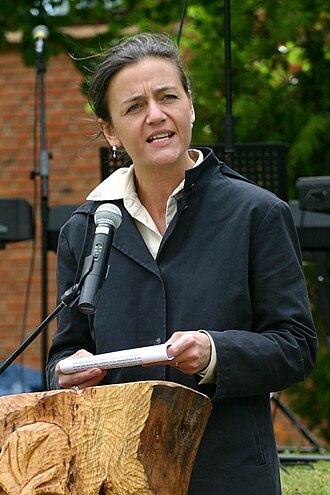 Margrethe VestagerChair, Danish Technical University
-
 Maria RessaNobel Peace Prize laureate, CEO of Rappler
-
 Marietje SchaakeInternational Policy Director, Stanford Cyber Policy Center
-
 Vidya PetersCEO of DataSnipper
-
 Ali NiknamCEO and founder of Bunq
Common questions
- Can ChatGPT find conference speakers?
- It can produce names quickly and often good ones, which is why most people start there. What it cannot do is tell you which of those names it is sure about. The failure mode is a plausible person attached to a conference they never spoke at, written in exactly the same confident register as the correct answers.
- Why not just ask an AI and check the results myself?
- That is a reasonable workflow and it is the one we would recommend — but checking is the expensive part, not the listing. Verifying a single "spoke at KubeCon 2025" claim means finding the conference, finding the year, and hoping the agenda is still online. Here the same claim arrives with the agenda URL already attached.
- Can an AI agent use speakerstrail directly?
- Yes, and that is deliberate. Every page has a markdown twin at the same path, there is a public unkeyed REST API, and llms.txt states which questions the dataset answers well and which it cannot answer at all. An agent reading those gets sourced records instead of generating names.
- What can ChatGPT do that speakerstrail cannot?
- Almost everything except the lookup. Reason about whether a speaker suits your theme, summarise their work, translate a bio, draft the invitation, and range across every region and industry rather than European AI and tech. We are a directory with filters and a stated boundary — narrow on purpose.
The bottom line
Asking a model is the fastest way to get ten names and the slowest way to get ten names you can defend, because verification is the part it hands back to you. The useful split is to let it do what it is good at — suggesting people, reasoning about fit, drafting the email — and to take the underlying facts from somewhere that publishes its sources. That is this directory, and it is built to be read by an agent as readily as by a person.
Build your next shortlist on links, not claims
You have just read how this directory differs from ChatGPT. If cross-platform, agenda-verified records are what you need — 1129 speakers, each carrying the source link that proves it — the beta is open. We let agencies in ten at a time. Free, no card.
Other comparisons
vs Sessionizevs SpeakerHubvs eSpeakersvs Speaker bureausvs LinkedInvs SpeakUpvs Talkadotvs Speakers.comvs The AI Conferencevs Kruger Cownevs European Speakers Bureauvs Speakabout.aivs Pretalxvs Sched